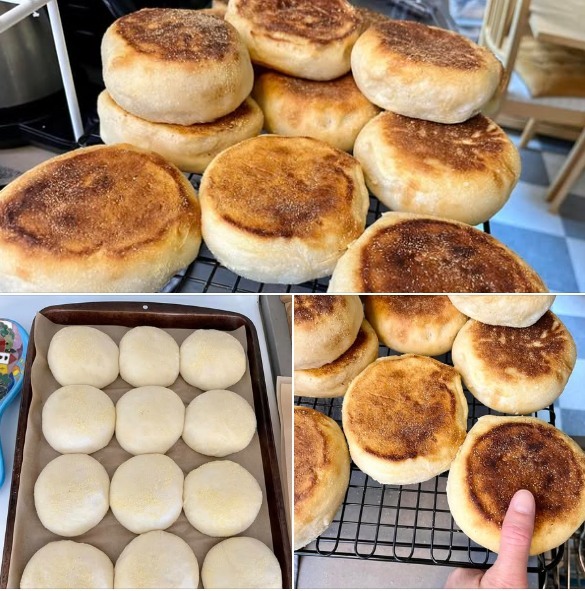
🫓 Fluffy English Muffins (Homemade Recipe)
🟡 Introduction
Fluffy English muffin are soft, lightly crisp breakfast breads known for their airy interior and signature “nooks and crannies.” These pockets make them perfect for soaking up butter, jam, honey, or egg yolk in breakfast sandwiches.
Unlike regular bread, English muffins are traditionally cooked on a stovetop griddle rather than baked in an oven. This gives them a golden crust on the outside while keeping the inside soft and fluffy.
Making them at home is surprisingly simple. With basic pantry ingredients and a little patience for proofing, you can create bakery-style muffins that taste fresher and softer than store-bought versions.
⏱️ Cooking Time & Servings
- Prep time: 20 minutes
- Rising time: 1.5–2 hours
- Cooking time: 15–20 minutes
- Total time: ~2.5 hours
- Servings: 8 muffins
🧾 Ingredients
Dry ingredients
- 2½ cups all-purpose flour
- 1 tsp salt
- 1 tbsp sugar
- 2 tsp instant yeast
Wet ingredients
- ¾ cup warm milk
- 2 tbsp melted butter
- 1 egg
For dusting
- Cornmeal (optional, for coating)
👩🍳 How to Make Fluffy English Muffins
Step 1: Activate yeast
Mix warm milk, sugar, and yeast in a bowl. Let it sit for 5–10 minutes until foamy.
Step 2: Make dough
Add flour, salt, egg, and melted butter. Mix until a soft dough forms.
Step 3: Knead
Knead for 8–10 minutes until smooth, elastic, and slightly sticky.
Step 4: First rise
Cover and let the dough rise for 1–1.5 hours, or until doubled in size.
Step 5: Shape muffins
Roll dough to about 1–1.5 cm thickness. Cut into rounds using a cutter or glass.
Step 6: Second rise
Place on a tray sprinkled with cornmeal. Let rest for 20–30 minutes.
Step 7: Cook on pan
Cook on a low heat skillet or griddle:
- 5–7 minutes per side
- Cover the pan to help cook evenly inside
Step 8: Cool and split
Let muffins cool, then split open using a fork to create the classic textured interior.
📝 Notes
- Keep heat low while cooking to avoid burning the outside.
- Dough should be slightly sticky for soft, fluffy results.
- Fork-splitting is important—it creates the traditional rough texture.
- You can refrigerate dough overnight for better flavor development.
❓ FAQs
1. Why are my English muffins dense?
Usually caused by under-proofing or adding too much flour during kneading.
2. Can I bake English muffins instead of pan-cooking?
Yes, but they will turn out more like soft bread rolls rather than traditional muffins.
3. What creates the “holes” inside English muffins?
Gas bubbles from yeast fermentation create the signature airy structure.
4. Can I freeze English muffins?
Yes. Freeze after cooking and reheat in a toaster or pan.
📊 Nutrition Information
Per 1 muffin (approx.)
| Nutrient | Amount |
|---|---|
| Calories | ~160 kcal |
| Carbohydrates | ~28 g |
| Protein | ~5 g |
| Fat | ~4 g |
| Sugar | ~2 g |
| Fiber | ~1–2 g |
| Sodium | ~200 mg |
Whole batch (8 muffins)
| Nutrient | Amount |
|---|---|
| Calories | ~1,280 kcal |
| Carbohydrates | ~224 g |
| Protein | ~40 g |
| Fat | ~32 g |
⚠️ Disclaimer
This recipe should be enjoyed in moderation as part of a balanced diet. It contains gluten, dairy, and eggs, which may cause allergic reactions in sensitive individuals. Always check ingredient suitability if you have food allergies or dietary restrictions.