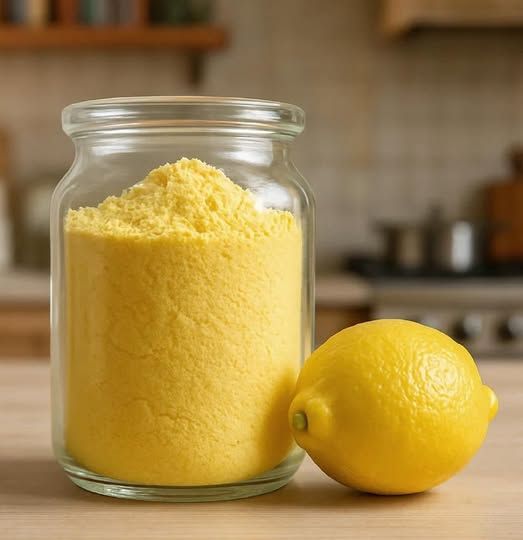
🍋 Homemade Lemon Powder (Natural Citrus Seasoning)
🟡 Introduction
Lemon powder is a concentrated citrus seasoning made from dried lemon peel or whole lemon slices. It delivers a strong, tangy lemon flavor in a shelf-stable form that can be used in cooking, baking, and drinks.
This homemade version is popular because it preserves the bright aroma of fresh lemons without the need for refrigeration. A small amount goes a long way, making it a powerful natural flavor enhancer.
It’s commonly used in teas, desserts, marinades, and spice blends, offering a convenient way to add citrus taste year-round.
⏱️ Preparation Time & Yield
- Prep time: 10–15 minutes
- Drying time: 6–12 hours (or overnight)
- Grinding time: 5 minutes
- Total time: ~1 day (mostly drying)
- Yield: About ½ cup lemon powder
🧾 Ingredients
- 4–6 fresh lemons
- Optional: pinch of salt (for preservation enhancement)
👩🍳 How to Make Homemade Lemon Powder
Step 1: Wash lemons
Thoroughly wash lemons to remove dirt and wax.
Step 2: Peel or slice
Peel only the yellow zest (avoid white pith) or slice lemons thinly.
Step 3: Dry lemons
Place peels or slices on a tray and air-dry, sun-dry, or use an oven at low temperature (60–70°C / 140–160°F) until completely dry.
Step 4: Check dryness
Lemon pieces should be brittle and break easily.
Step 5: Grind
Blend dried lemon pieces into a fine powder using a grinder or blender.
Step 6: Store
Store in an airtight glass jar away from moisture and sunlight.
📝 Notes
- Avoid white pith as it can make the powder bitter
- Fully dry lemons to prevent mold
- Store in a cool, dry place for longer shelf life
- You can mix with sugar or salt for flavored seasoning blends
❓ FAQs
1. What can I use lemon powder for?
It can be used in baking, teas, marinades, salad dressings, and desserts.
2. How long does it last?
Properly stored lemon powder can last up to 6 months.
3. Can I use a dehydrator?
Yes, a dehydrator gives the best consistent results.
4. Is it stronger than lemon juice?
Yes, it is more concentrated, so use in small amounts.
📊 Nutrition Information
Per 1 teaspoon (approx.)
| Nutrient | Amount |
|---|---|
| Calories | ~5–10 kcal |
| Carbohydrates | ~1–2 g |
| Fiber | ~0–1 g |
| Sugar | ~0–1 g |
| Fat | 0 g |
| Vitamin C | Trace amounts |
Whole batch (½ cup approx.)
| Nutrient | Amount |
|---|---|
| Calories | ~40–70 kcal |
| Carbohydrates | ~10–15 g |
⚠️ Disclaimer
This recipe is made from natural citrus fruit and is generally safe, but excessive use may cause acidity or stomach sensitivity in some individuals. Ensure proper drying and storage to avoid spoilage or contamination.